


Digital Product Passport
easy.dpp.nrw – Co-creation of a cross-industry software toolkit for Digital Product Passports
In the easy.dpp.nrw project, the IT company celano, the supplier agathon, and the research partners Ruhr West University of Applied Sciences and the Wuppertal Institute are working together to develop a modular, scalable, and cross-industry software toolkit for the Digital Product Passport (DPP).
The aim is to make it easier, particularly for small and medium-sized enterprises (SMEs) in North Rhine-Westphalia, to access digital product passports and circular business models. With the help of the easy.dpp tool, companies will be able to identify, further develop, and implement suitable circular economy strategies (R-strategies) based on data. The project follows a clearly practice-oriented bottom-up approach: technical, organizational, business model–related, and social innovations are considered together to effectively support the transition to sustainable digitalization.
This will result in a forward-looking solution – from NRW, for NRW.
What is the Digital Product Passport?
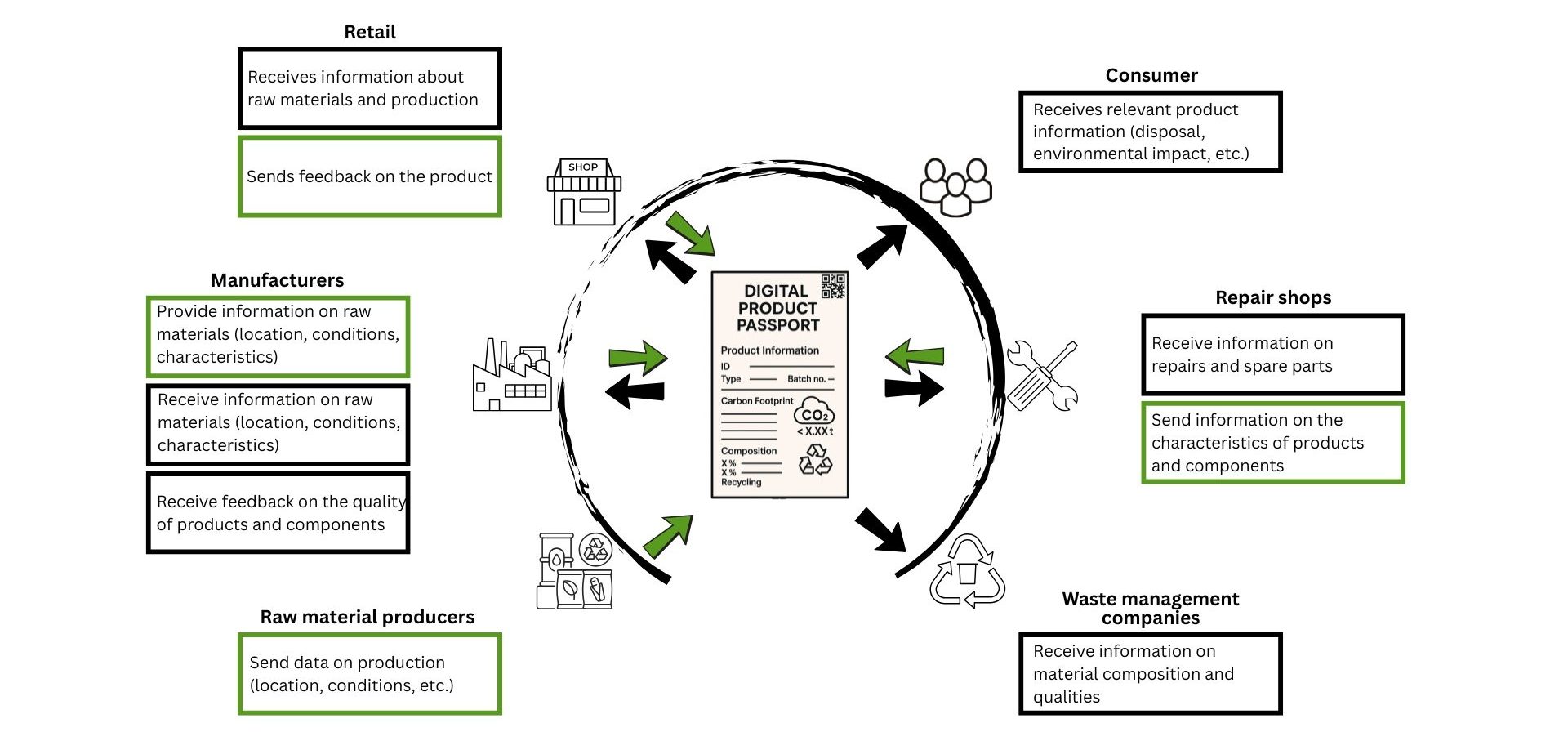
The Digital Product Passport (DPP) is a new concept introduced by the European Union to provide comprehensive product information digitally and transparently—covering the entire product lifecycle.
The passport contains key data about a product: where it comes from, what it is made of, and how it can be used, maintained, repaired, recycled, or disposed of. Unlike traditional product labels, which offer only limited information and quickly become outdated, the Digital Product Passport can be continuously updated and accessed through a digital medium (e.g., QR code or NFC chip). It accompanies a product from manufacturing through sale to reuse, recycling, or disposal—ensuring greater transparency, sustainability, and efficiency.
The DPP is designed not only for consumers but also for businesses, public authorities, and recycling companies. All of them gain access to relevant information in a standardized format, enabling more informed and sustainable decision-making.
Why the Digital Product Passport?
The Digital Product Passport is part of a comprehensive political and regulatory transformation in the European Union. It is a key instrument of the EU’s circular economy strategy and was developed within the framework of the European Green Deal and the Circular Economy Action Plan.
Its aim is to make the European economy more sustainable, resource-efficient, and digitally interconnected. Specifically, the DPP is embedded in the proposal for the Ecodesign for Sustainable Products Regulation (ESPR), which the European Commission presented in June 2024. This regulation will replace and significantly expand the existing Ecodesign Directive.
The Digital Product Passport is defined within it as a mandatory element for certain product groups—tailored to their ecological relevance, complexity, and recycling potential.
How does the Digital Product Passport work?
The Digital Product Passport is directly linked to the product—usually via a machine-readable code such as a QR code, RFID tag, or NFC chip. When scanned, it leads to a digital platform where all relevant product data is stored and accessible.
The information it contains is based on standardized requirements currently being developed by the EU in collaboration with industry associations and expert committees. Importantly, the data must be up to date, verifiable, and machine-readable—while also being protected if it contains sensitive company information. In addition, a distinction will be made between mandatory information and optional information provided voluntarily by the manufacturer.
Which products will need a Digital Product Passport?
The Digital Product Passport (DPP) is being introduced gradually and is part of the EU’s “Ecodesign for Sustainable Products Regulation” (ESPR). It is initially intended for product groups with significant resource or environmental relevance, for example:
● Batteries
● Textiles (e.g. clothing, shoes)
● Electronic devices and household appliances
● Construction materials
● Vehicles and vehicle components
● Steel and metal products (in preparation)
In the long term, the DPP is planned to become mandatory for all physically marketed products in the EU – with a few exceptions such as food and pharmaceuticals.
Learn more about easyDPP
Find out more about the easyDPP research project and get in touch with the right contact persons.
Project Team
Get to know the companies, universities and institutions behind the easyDPP research project.
Meet the project team →Latest News
Discover the latest developments, events and news about easyDPP and the Digital Product Passport.
View latest news →Contact
Do you have questions about the research project or the Digital Product Passport? Get in touch with us.
Get in touch →